What a $500 Grant Taught Me About Fundraising: Lessons from 17 Years in the Nonprofit Sector by Roseline Kamdem
My first fundraising win wasn't a six-figure grant. It was $500.
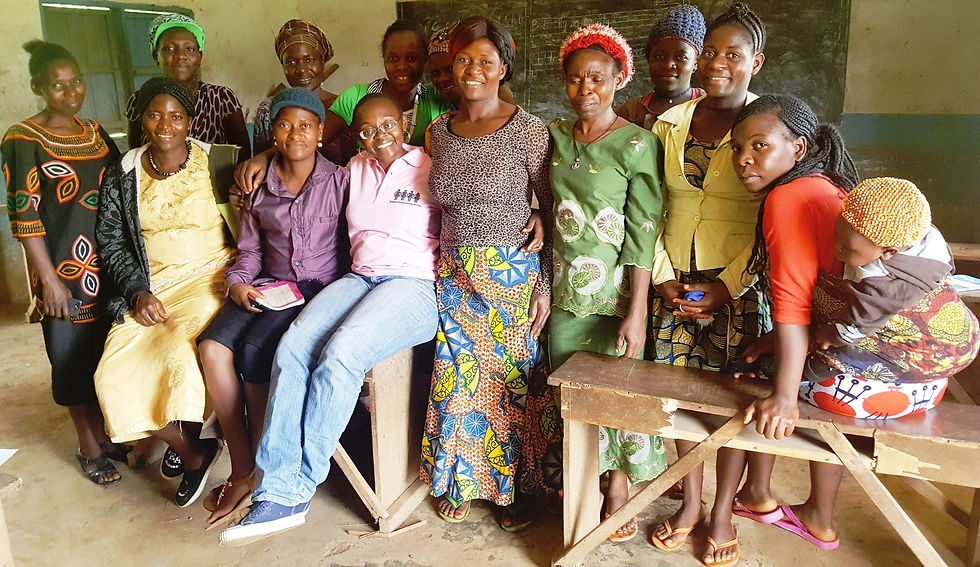
I co-founded African Youth Alliance Group, a small NGO serving rural women and girls in Northwest Cameroon. We had submitted proposal after proposal, collecting more "We regret to inform you" emails than I care to remember, before that first yes arrived.
$500, won out of 356 submissions, for a project on menstrual health for 90 girls in West Cameroon. We celebrated. Genuinely.
Looking back, that $500 grant taught me more about fundraising than any training I have attended since. Not because of the amount. Because of what it took to get there and what it took to keep going after.
Seventeen years later, having worked across local NGOs, feminist grantmaking organizations, and large international humanitarian INGOs, I can trace many of the fundraising lessons I know back to those early days.
Lesson 1: Resilience is not optional. It is at the core of the work
Before that first $500, there were months of submissions. And rejections.
Each "We regret to inform you" felt personal. It wasn't. But it felt that way.
What kept us going wasn't confidence. It wasn't a perfect strategy. It was the women we had already promised to serve and a quiet stubbornness that refused to let silence be the final answer.
That mental resilience, yours and your team's, is not a nice-to-have in fundraising. It is the foundation everything else is built on.
The organizations that sustain themselves over time are not always the ones with the best proposals. They are the ones who keep submitting when it would be easier to stop.
Rejection is part of the work.
Nobody tells you that at the beginning.
They should.
Lesson 2: Relationships open doors that proposals cannot
In 2019, I attended Women Deliver in Vancouver, a global conference on gender equality and women's health. The African Youth Alliance Group was still small. Our budget was modest. But we went.
At that conference, I met the founder and Executive Director of Rockflower, a foundation supporting women and girls through grassroots organizations. She had already given us a small grant. But meeting her in person cemented something that a proposal never could.
We had a conversation. A real one. Not a pitch. Not a formal introduction.
I didn't lead with our numbers or our reach. I talked about the women we were serving, who they were, what they carried, why this work mattered to them and to us.
Everyone talks about storytelling in fundraising. And stories matter. But what I observed, in feminist grantmaking and in large institutional funding alike, is that donors ultimately invest in people they trust.
Stories can be crafted. Trust cannot.
Meeting her wasn't powerful because I told a compelling story. It was powerful because she could see who we were, our commitment, our honesty, our belief in the work. What she funded wasn't our narrative. It was her confidence in us as people, in our judgment, our integrity, and our ability to deliver on what we promised.
Over the years that followed, her support grew to more than $50,000.
That lesson followed me into the international sector.
A large multi-million-dollar award I helped secure didn't begin with a call for proposals. It began with quiet conversations at country level and at headquarters, months before the opportunity was announced. By the time the call launched, we weren't introducing ourselves. We already existed in their minds.
Built on two years of solid implementation. Financial reports submitted on time. Narrative reports that told the truth, including the difficult parts.
The proposal confirms what a donor already thinks of you.
The relationship and the track record are what shape that thinking.
Lesson 3: Diversification is not a crisis strategy. It is preparation
In early 2025, the U.S. government's foreign assistance landscape changed dramatically.
Following a 90-day pause and review of foreign assistance, the State Department announced the cancellation of 5,200 USAID awards worldwide, representing about 83% of USAID programs [Source: USAID Office of Inspector General]
Organizations that had built their entire portfolio around one dominant donor were suddenly in crisis, scrambling for alternatives and making difficult decisions about programs and people.
We were not untouched. But we were better positioned than many.
Because before the suspension, we had already invested in relationships with several European institutional donors. Not because we anticipated the crisis. Because we understood that depending on one donor is a vulnerability, not a strategy.
The organizations that struggled most were not necessarily those with the weakest programs. They were the ones that had become too comfortable with one source of funding.
Diversification begins long before you need it.
And the need for diversification extends beyond any single donor. In 2024, official development assistance fell 6% globally, while humanitarian aid fell by 9.6%. The funding environment itself was becoming more constrained. [OECD]
This lesson started with the African Youth Alliance Group, where a single grant ending meant everything stopping. Where community volunteers planned their lives around stipends tied to one project cycle.
Seventeen years later, the scale was different. The lesson was the same.
Never let one donor become your only door.
What the $500 taught me that the millions confirmed
The fundamentals of fundraising do not change with scale.
Resilience, relationships, and diversification. I learned all three from a small NGO in Northwest Cameroon, running on grants that most international donors would consider too small to process.
Those early lessons did not become irrelevant when I moved into larger organizations. They became more important.
Because the stakes were higher. The teams were bigger. The communities depending on us were larger.
But the principles were the same.
Start before you need to. Build relationships before you need them. Keep going when the rejections come.
Stories can be crafted. Trust cannot.
In my experience, the strongest proposals were never the most polished ones. They were the ones backed by relationships built long before the deadline.
If you enjoyed reading this piece - there's more where this came from!
Roseline Kamdem is a humanitarian and development leader with over 17 years of experience across Francophone Africa. She has worked across local NGOs, feminist grantmaking, and large international organizations. She writes about leadership, resilience, and what the sector rarely says out loud.


Comments