Global Meetings That Change Nothing And What We Should Do Differently.
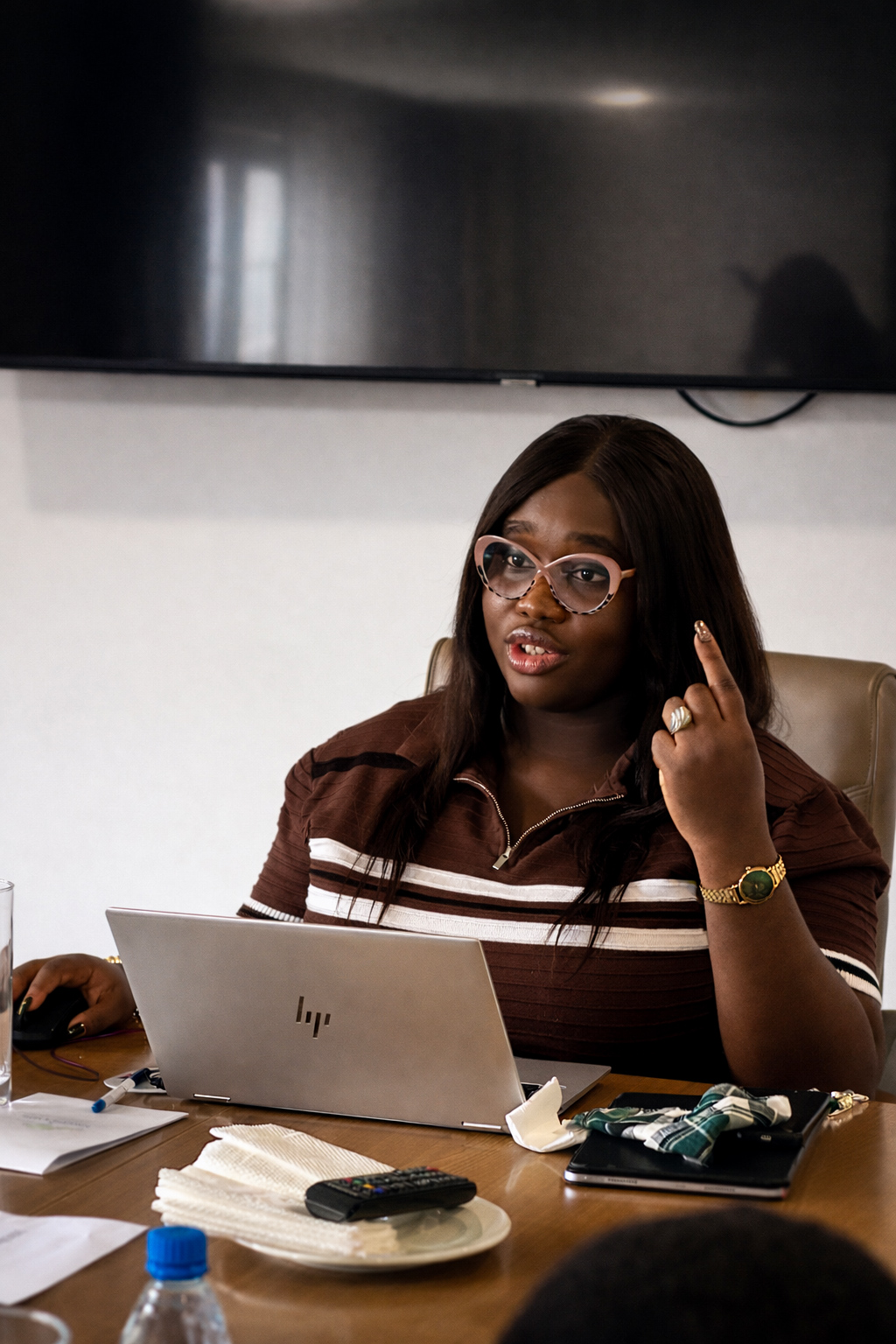
A field note on global education conferences and the voices missing from the table.

I want to tell you about a meeting I have been to many times.
The venue changes. The city changes. Sometimes it is a glass-walled conference room in a European capital. Sometimes it is a hotel ballroom dressed up with the flag colors of whichever multilateral body is convening. The agenda always promises transformation. There is usually excellent coffee. There is always a panel.
On the panel, there are four people. Three of them represent institutions headquartered in the Global North. One of them — occasionally two, if it is a particularly progressive convening represents the region being discussed. That person is introduced with warmth and applause. They are asked to speak about their community's experience, usually in five minutes or less. And then the conversation moves on.
By the end of the day, a communiqué has been drafted. It uses words like inclusive, participatory, and community-centered. It references SDG 4. It will be filed somewhere important. And the people whose lives it was written about will not read it, because they were not in the room, or they were in the room but not at the table, or they were at the table but not given the floor, or they were given the floor but not given time.
I have sat in that room. I have also been that person — the one invited to represent a continent's worth of complexity in five minutes. And I want to be honest about what it feels like, and what I think we need to do differently.
The Architecture of These Spaces
Let me be precise about what I am critiquing, because I believe in the work that happens inside these convenings. UNESCO's 2024 Global Education Meeting, held alongside Brazil's G20 presidency, brought the international education community together under an equity and inclusion mandate. The UN Pact for the Future signaled the importance of engaging local governments, civil society, and community actors in global governance. These are not hollow gestures. They represent real political movement in the right direction.
But political movement and structural change are not the same thing.
The architecture of most global education convenings is built on a fundamental assumption: that the people who study a problem are better positioned to solve it than the people who live inside it. This assumption shapes everything, who is invited, who presents, who is consulted in the preparatory process, and whose frameworks become the basis for the final document.
A recent Brookings global listening survey asked the education community across six continents what was missing from the global agenda. A respondent in Somalia said: "Young people especially displaced youth are left out of decision-making." A respondent in Kenya put it plainly: "All voices in these talks, not just from large implementors — because the 'small' ones have more eyes and heart on the ground."
This is not a new observation. It has been made in communiqués, in academic literature, in private conversations over dinner at the end of conference days. And yet the architecture persists.
The Problem with Tokenism at the Table
There is a specific dynamic that happens when Global South voices are included in these spaces in small numbers, which is the most common form of inclusion. Researchers studying editorial representation in academic journals have documented it clearly: when individuals from marginalized communities are invited into majority-dominated spaces, they are often expected to represent not themselves but an entire region, an entire demographic, an entire lived experience. One person becomes the spokesperson for all of Africa. One refugee advocate becomes the stand-in for every displaced community.
This is not inclusion. It is what researchers call tokenism and it does something particularly insidious in the context of education policy. It gives the room permission to feel like it has heard from the community, without actually being accountable to the community. The diverse face on the panel becomes the evidence that the process was participatory. The communiqué can then say so.
Meanwhile, as scholarship on youth participation at global summits has shown, even when community representatives are physically present, bureaucratic barriers, funding constraints, and spatial design who sits where, who has a microphone, who is listed as a panelist versus an observer shape whose voice carries weight.
Presence is not the same as power.
What Gets Lost When Policy Is Made Without the Field
I want to ground this in something concrete, because the stakes are not abstract.
When policy around refugee education is designed primarily by people who have not worked inside refugee settlements, who have not watched a girl choose between enrolling in school and earning the income her family needs to survive that week — something gets lost in translation. Not because those people are not intelligent or well-intentioned. But because proximity to a problem changes the quality of your solution.

From my own work with PASS USA and South Sudanese youth, especially young women, I have learned things about the barriers to higher education access that do not appear in policy documents. I have learned that a scholarship is only as useful as the wrap around support that follows it. Providing college tuition support to a refugee youth does not mean that they will stay in school. Refugees need living allowances for housing, feeding and other needs that are not linear to academia. Some of them even need documentation and visa support. For girls, the support goes even much deeper. Part of our interventive services have involved menstrual health care, protection against sexual abuse, and more.
I have learned that the concept of "a supportive family environment" means something entirely different in a displacement setting than it does in the framework language. I have learned that the students who need the most support are often the ones who present the least legibly to formal selection processes, not because they are less capable, but because legibility itself is a product of privilege.
These are not obscure insights. They are the daily currency of every community-based organization doing this work. But community-based organizations are rarely the ones writing the frameworks.
So What Does a Different Kind of Meeting Look Like?
I want to resist the temptation to prescribe, because prescribing solutions from a distance is precisely the pattern I am critiquing. But I can say what I have seen work, and what I believe the field needs more of.
It looks like design processes that begin in community, not in capital cities. Not consultations held after the agenda has been drafted, genuine co-design, where community actors shape the questions before the experts arrive to answer them.
It looks like funding that reaches organizations with "eyes and heart on the ground," not only the large implementors with the infrastructure to absorb institutional grants. If the NGO sector is expected to do the field work that informs global policy, then the resource flows need to reflect that relationship, honestly.
It looks like redefining what counts as expertise. A woman who has spent fifteen years navigating the education system with her children in a refugee camp has expertise. A young man who built a study group out of nothing in a settlement with no school has expertise. The absence of a credential does not equal the absence of knowledge.
And it looks like accountability mechanisms that connect the communiqué back to the community not as a reporting requirement, but as a genuine feedback loop. What did we say we would do? What actually happened? Who is asking?
A Note on Why I Still Go
I want to be clear: I am not arguing that global education convenings are useless. I attend them. I believe in the power of collective political will, and I know that these spaces can generate it when they work well.
I go because the alternative — ceding these rooms entirely to those who do not share our field experience is worse. I go because there are people in these spaces who are genuinely trying to shift the architecture, and they need allies. I go because sometimes, in the margins of these meetings, in the hallways and dinner conversations and side events, the real work happens; the partnerships that form, the ideas that cross-pollinate, the relationships that make the next collaboration possible.
But I go with clear eyes. And I think those of us who move between the field and these formal spaces have a responsibility to say, loudly and without apology, what we observe. Not to burn the room down. But to insist that the room be worthy of the problems it is trying to solve.
Because the students we work with, the girls navigating displacement, the young men rebuilding after conflict, the first-generation scholars pushing through every structural barrier, they are not waiting for the next communiqué.
They are waiting for the work to match the words.
If you enjoyed reading this piece - there's more where this came from!
JB Favour is currently the Executive Director of PASS USA (Padoc Area Scholars Society, USA), a nonprofit based in the United States but serving East Africa, providing full-ride higher education scholarships, wraparound support, leadership and mentorship. to underserved South Sudanese youth and refugees, with a strong focus on girls' education across East Africa. She writes about global education equity, nonprofit leadership, and the intersection of advocacy and policy.


Comments